
Cleaning a beer dispensing system – keeping the beer line clean
Freshly tapped beer only tastes right from a clean system. Over time, hop resins, protein, beer stone and limescale build up in the beer line, keg coupler and tap – a breeding ground for germs. The result is off-flavours and unsettled foam. Regular cleaning prevents this.
Three types of cleaning
1. Interim cleaning at the tap
With tap cleaning bellows you flush the tap in seconds without removing it: the bellows draw in clean water or a disinfectant solution (e.g. Bevi NeutroDes) and push it through the spout. Ideal for daily care – but it does not replace cleaning the whole line.
2. Chemical cleaning
A cleaning solution fills the entire line and dissolves the deposits. There are two types of cleaner, used alternately on a regular basis:
- alkaline (basic cleaning): against organic deposits such as hop resins, protein and biofilm,
- acidic (intensive cleaning): against beer stone and limescale.
In static cleaning the solution stays in the line for 15–20 minutes. With a cleaning device it is pumped in a circuit for about 15 minutes. Which product is suitable for what is explained in the cleaning agents overview.
3. Mechanical cleaning
Cleaning sponges are pushed through the line with water or cleaning solution and remove stubborn deposits too. Most thorough is both combined – chemical-mechanical cleaning. The right size matters:
| Beer line | Cleaning sponge | Tap brush |
|---|---|---|
| NW 7 mm | Ø 9.5 mm | 16.5 cm |
| NW 10 mm | Ø 15 mm | 24 cm |
Step by step: cleaning the line
- Detach the keg coupler from the keg and fit it to a cleaning container or cleaning adapter. The cleaning container is connected like a beer keg – so the solution reaches the whole line up to the tap.
- Flush the line with clean water until no more beer comes out.
- Prepare the cleaning solution as directed on the pack and fill the line: open the tap until solution comes out, then close it.
- Leave it for 15–20 minutes or pump it in a circuit for approx. 15 minutes with the cleaning device – ideally together with sponges.
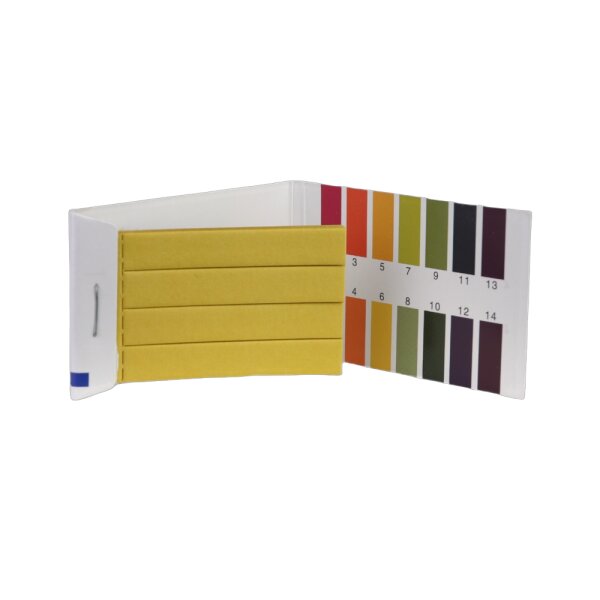
- Rinse thoroughly with drinking water until the rinse water is neutral again. Check this with pH indicator paper – here’s how.
- Clean the tap with the tap brush, the keg coupler and fitting with the keg cleaning brush. Treat moving parts of the tap with tap grease if necessary.
Cleaners such as TM Desana show when the line is clean: the solution is renewed until it keeps its colour.
Checking for cleaner residue with pH indicator paper
After cleaning, no cleaning agent may remain in the line – otherwise it ends up in the first beer. You cannot see this in the rinse water. pH indicator paper shows it: alkaline cleaners raise the pH of the water, acidic ones lower it. Only when the rinse water has the same pH as your drinking water has the cleaner been rinsed out completely.
- Take a reference value: briefly dip a test strip into fresh tap water and compare the colour with the colour scale. Tap water is not exactly neutral everywhere – so your own water is the benchmark.
- Measure the rinse water: after rinsing, tap some water straight from the tap into a clean glass and dip a new strip into it. What comes out of the tap reflects the whole line.
- Compare: same colour as the tap water – the line is rinsed clean and the keg can be reconnected. Different colour – keep rinsing with drinking water and measure again.
pH indicator paper80 test strips
Test strips for cleaning checks: show after cleaning whether the line is free of cleaning agent residue.
- When
- after every cleaning – after alkaline as well as after acidic cleaning
- Enough for
- around 40 cleanings if you use one strip each for tap water and rinse water
- Good to know
- The colour indicator of TM Desana shows whether the line is clean. Only the indicator paper shows whether the cleaner has been rinsed out completely.
How often should you clean?
- Tap: daily interim cleaning with the bellows.
- Whole line in catering: usually weekly. For commercial dispensing systems the relevant standard is DIN 6650-6.
- Private and mobile systems (rule of thumb): after every keg and before a longer break.
- Alkaline and acidic alternately on a regular basis.
- Dose cleaners according to the label. With acidic cleaners wear acid-resistant protective gloves and safety goggles.
- Never put cleaning tablets into the line undissolved.
- Fill the cleaning container with cold water only (max. approx. 4 bar), depressurise and rinse it after use; do not store cleaning agents in it.
Matching products
- Cleaning agents overview
- pH indicator paper
- Cleaning kits
- Chemical cleaning
- Mechanical cleaning
- Cleaning accessories
- All cleaning products
Questions about your system? Write to us – we are happy to help. More topics under Good to know.
All information without guarantee. The manufacturers’ operating instructions and notes are authoritative.