
Keeping wine and sparkling wine fresh – how opened bottles last longer
The bottle is open but not empty? No reason to pour the rest away. Wine loses its aroma to oxygen, sparkling wine loses its fizz as the carbon dioxide escapes. The right stopper slows both down – for a few days or several weeks, depending on the method.
What happens in an opened bottle
| Wine | Sparkling wine, prosecco, champagne | |
|---|---|---|
| Problem | The air in the bottle makes the wine oxidise. | The carbon dioxide rises out of the drink into the empty space in the bottle. |
| Result | Fruit and freshness fade, the wine turns brownish and smells of sherry, later of vinegar. | The wine goes flat – even with a tight stopper. |
| Solution | Keep oxygen away: vacuum or inert gas | Put pressure into the bottle: pump or CO2 |
The methods compared
| Method | for | How it works | fresh for longer* |
|---|---|---|---|
| Cork or stopper only | wine, sparkling wine | seals the bottle, the air inside stays | wine 2–4 days, sparkling wine about 1 day |
|
Vacuum pump Wine Fresh |
wine | pumps the air out of the bottle | at least 1 week |
|
Inert gas blanket Wine Protector |
wine | gas settles on the wine and keeps oxygen away | at least 3 weeks |
|
Stopper with pump Champagne Fresh |
sparkling wine | slight counter-pressure keeps the CO2 in the drink | 3–5 days |
|
CO2 inert gas Champagne Protector |
sparkling wine | repressurises the bottle and displaces the oxygen | at least 3 weeks |
* Manufacturer figures for an opened bottle in the fridge; the values without aids are rules of thumb. How long it really tastes good depends on the wine and on how full the bottle still is.
Keeping wine fresh
Vacuum: pumping the air out
A rubber stopper with a valve goes on the bottle, and a small hand pump draws the air out. Without oxygen the wine hardly oxidises – according to the manufacturer, red and white wine stay fresh for at least a week longer. The method is inexpensive, quick and needs no capsules.
- Press the stopper firmly into the neck straight after pouring.
- Place the pump straight on top and pump until you feel clear resistance.
- Store the bottle upright in the fridge. Lying down, wine can get into the stopper and make it leak.
Inert gas: a blanket over the wine
At the push of a button, the Wine Protector lays a gas blanket on the surface of the wine. The gas is heavier than air, stays on the wine and keeps oxygen away – without changing the taste. The wine stays fresh for at least three weeks longer. Ideal for fine wines you enjoy by the glass over a longer period. Refills: wine protection capsules (8 g N2O).
Dispensing under inert gas
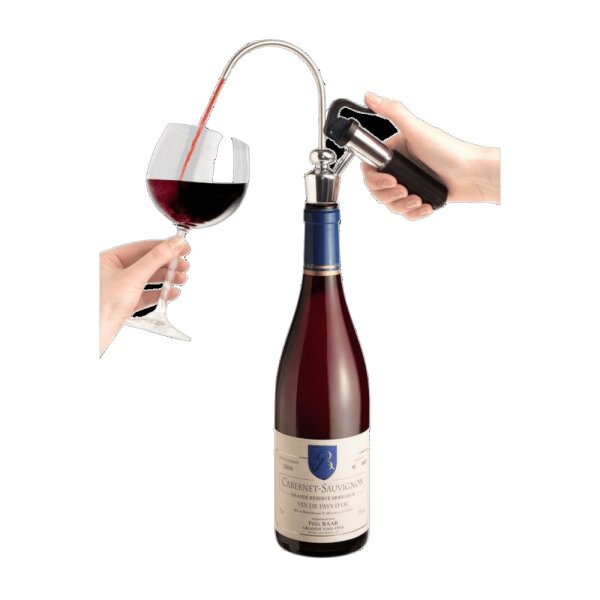
With the L’Ami du Vin you pour directly under inert gas: the dispensing head sits on the bottle, and the remaining wine never comes into contact with oxygen. One gas unit supplies any number of dispensing heads – practical when several wines are open at once.
Wine FreshVacuum
Vacuum pump with two stoppers – the easy start for red and white wine.
- Fresh
- at least 1 week longer
- Contents
- 1 vacuum pump, 2 stoppers with non-return valve
- Good to know
- Premium version with brass cap: Wine Fresh de Luxe II.

Wine ProtectorInert gas
Lays a protective gas blanket over the wine at the push of a button – for the longest shelf life.
- Fresh
- at least 3 weeks longer
- Contents
- Wine Protector, 4 inert gas capsules (N2O)
- Capsules
- Wine protection capsules 8 g N2O, pack of 10

L’Ami du VinDispenser
Wine dispenser under inert gas: the remaining wine stays separated from oxygen and keeps its full aroma.
- Fits
- any wine bottle, stainless steel riser tube adjustable in height
- Contents
- dispensing head (chrome-plated brass), gas unit, 3 inert gas capsules
Keeping sparkling wine, prosecco and champagne fresh
An ordinary sparkling wine stopper only seals the bottle: the carbon dioxide still rises out of the drink into the empty space until a balance is reached – and that is exactly the fizz missing from the glass. It is better to put pressure into the bottle.
Counter-pressure with a pump
With the Champagne Fresh you pump air into the bottle. The slight counter-pressure keeps the carbon dioxide in the drink – sparkling wine, prosecco, cava and champagne stay sparkling for 3 to 5 days.
- Put the stopper firmly on the bottle.
- Insert the pump pin into the opening of the stopper and pump two or three times.
- Remove the pump and put the bottle in the fridge.
CO2 inert gas for weeks
The Champagne Protector repressurises the opened bottle with food-grade CO2. The carbon dioxide stays bound, and the CO2 also displaces the oxygen – champagne, sparkling wine and cava stay fresh for at least three weeks longer. Ideal for serving by the glass in restaurants, bars and hotels. Refills: special capsules.
A wine pump draws air out – with sparkling wine it would pull the carbon dioxide out as well. For sparkling wine always use a stopper that builds up pressure. The Wine Fresh and Champagne Fresh pumps work in exactly opposite ways and are not interchangeable.
Champagne FreshCounter-pressure
Sparkling wine stopper with hand pump – keeps the fizz in the drink for the next few days.
- Fresh
- 3–5 days
- Fits
- common sparkling wine and champagne bottles without screw cap; separate version for Dom Pérignon bottles
- Good to know
- Extra stoppers work with the pump and with the Champagne Protector.

Champagne ProtectorCO2 inert gas
Repressurises the bottle with CO2 – for weeks instead of days, also when serving by the glass.
- Fresh
- at least 3 weeks longer
- Contents
- Champagne Protector, 1 CO2 special capsule, 1 stopper for standard bottles
- Capsules
- Special capsules, 5 or 25 pieces

Tip Top SealStopper
Clip stopper made of chrome-plated brass for sparkling wine, wine, oil and vinegar: snaps in under the bottle lip and holds tight.
- Good for
- the bottle you will finish tomorrow
- Tip
- Remove the decorative foil from the bottle lip, moisten the stopper slightly if needed. Not suitable for the pump or the Champagne Protector.

Five tips for longer-lasting leftovers
- Close it straight away. Every minute open costs aroma and fizz – close the bottle right after pouring.
- Keep it cold. Oxidation is much slower in the fridge, and cold sparkling wine holds its carbon dioxide better. This also applies to red wine: take it out about half an hour before serving.
- Store it upright. The stopper stays dry and tight, and no wine gets into the pump.
- The emptier, the faster. A half-full bottle holds far more air than an almost full one. If only one glass is left, drink it soon – or use inert gas.
- Look after pump and stoppers. Rinse stoppers with warm water and let them dry. Only wipe the pump on the outside with a damp cloth and do not put it in the dishwasher.
The right serving temperature
If you seal your leftovers well, enjoy them at the right temperature too. As a guide:
| Drink | Serving temperature |
|---|---|
| Sparkling wine, prosecco, champagne | 6–8 °C |
| Light white wine, rosé | 8–10 °C |
| Full-bodied white wine | 10–12 °C |
| Light red wine | 14–16 °C |
| Full-bodied red wine | 16–18 °C |
For the hospitality trade: wine and sparkling wine by the glass
If you sell wine and sparkling wine by the glass, you cannot afford flat leftovers. Proven for open dispensing:
- Champagne Protector for champagne, sparkling wine and cava – fresh for at least three weeks longer, made in Germany.
- Wine Protector for fine wines that are not ordered every day.
- L’Ami du Vin when several wines are open at once – one gas unit for any number of dispensing heads.
Larger quantities or dealer prices? Ask us.
Frequently asked questions
Does a silver spoon in the neck of the bottle help?
No. The spoon does not hold back any carbon dioxide – if the sparkling wine still fizzes a little the next day, that is down to the cold in the fridge. Only a tight stopper and pressure in the bottle really help.
Can I use the vacuum pump for sparkling wine?
No. The vacuum draws the carbon dioxide out of the wine. For sparkling wine you need a stopper that builds up pressure, such as the Champagne Fresh, or the Champagne Protector.
How can I tell that the wine has gone off?
White wine turns darker and brownish, red wine fades towards brown. The aroma goes flat and reminds you of sherry or nuts, later of sharp vinegar. It is usually harmless to health – and often still fine for cooking.
Why should the bottle stand rather than lie?
Lying down, the wine is in contact with the stopper: it can start to leak, and the next time you pump, wine gets into the pump. Upright, everything stays dry and the vacuum holds.
Do the stoppers fit every bottle?
Champagne Fresh and Champagne Protector fit common sparkling wine and champagne bottles without a screw cap; there are separate stoppers for Dom Pérignon bottles. The Tip Top Seal needs a bottle lip for the clip to snap under. The L’Ami du Vin dispensing head fits any wine bottle.
Which capsules do I need for my Coravin system?
Our argon capsules with 3/8″ thread are an inexpensive alternative to the original capsules. You need the black threaded cap of an original capsule, which you keep using. They are not suitable for the Wine Protector – use the N2O wine protection capsules for that.
Matching products
- Preservation
- Sparkling wine accessories
- Wine Fresh
- Wine Protector
- Champagne Fresh
- Champagne Protector
- Argon capsules
Questions about stoppers, pumps or capsules? Write to us – we are happy to help. More topics under Good to know.
All information without guarantee. The manufacturers’ operating instructions and notes are authoritative.